Is it safe to send my health card to a school or a gym?
Yes, if you limit the data and mark the copy. Your name and CIP are enough to identify you in healthcare; your Social Security number is almost never needed and is very sensitive. Send the copy with the unneeded data covered and the recipient marked on the image.
- Published:
- Reviewed:
- Editorial responsibility:
- Ofuska
- Jurisdiction:
- Spain
Why they ask for it
Schools and summer camps may ask for it so they can arrange medical care; gyms and insurers may use it to confirm cover. It is often sent by email or shared in a school or activity WhatsApp group.
That copy sits in school offices, shared folders and personal phones for years, with nobody remembering to delete it.
The real risk
The health card concentrates data that shouldn't travel together: the CIP is unique and lifelong (RD 183/2004), and the Social Security number — which some regions print on the card — is used for employment and benefits. Leaked, it opens the door to employment and administrative fraud.
How to send it with Ofuska
- 1
Store
Your health card is stored encrypted on your phone, like any other document.
- 2
Redact
Cover the Social Security number, the DNI number if it appears and the barcode if they don't require it. Your name, CIP and issuing entity stay visible.
- 3
Trace
A "School X, date" mosaic plus the authenticated v2 watermark. History retains the locally recorded copy according to your Free or Pro limit.
Verify Copy can link a PNG or JPEG to a copy stored on this phone if the image still contains the watermark. The app tells you whether it found a current watermark, an older one or none it can verify. PDFs cannot be checked directly.
Safer sharing guide →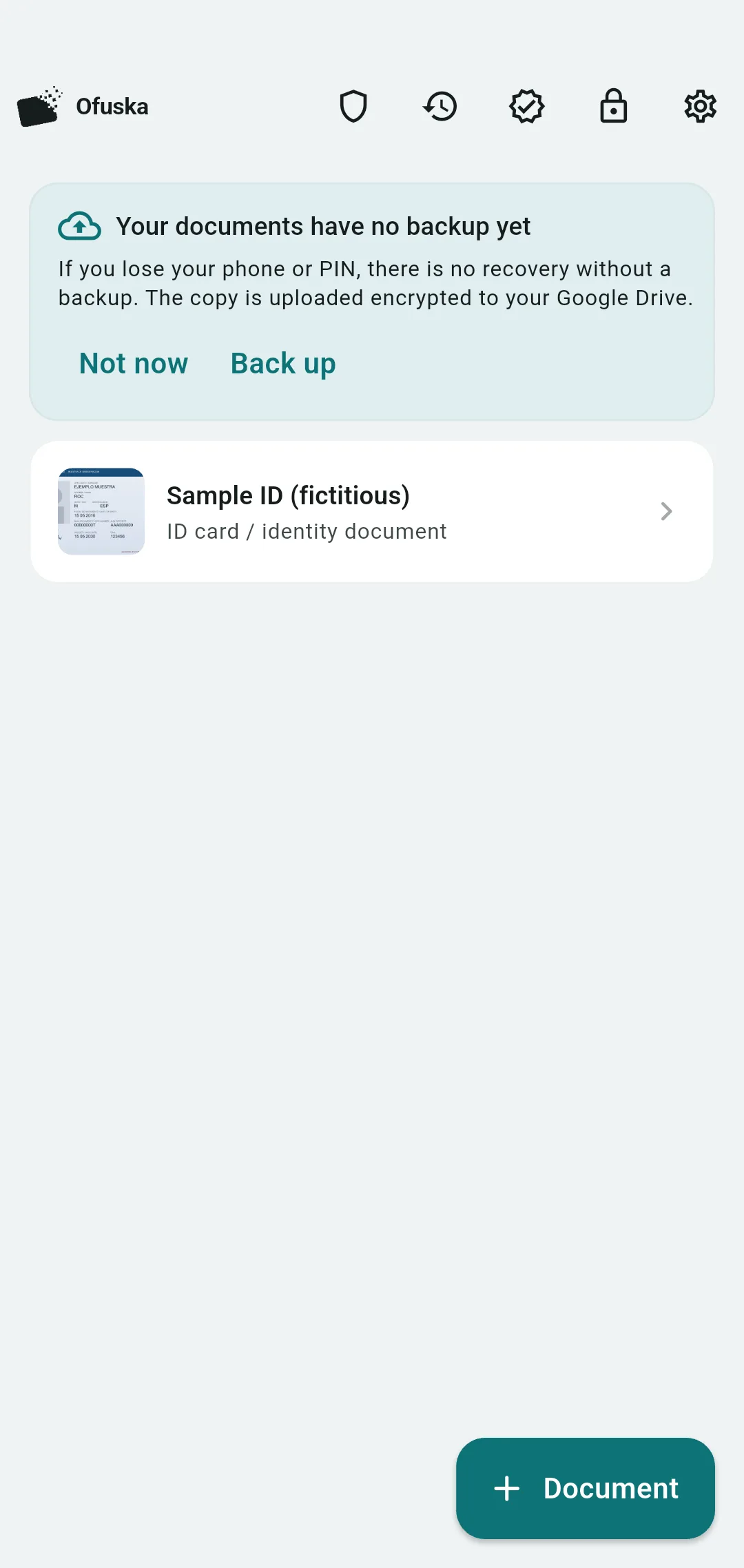
What to show and what to hide on your health card
The health card carries a CIP-SNS that is unique for life; the Social Security number and the DNI number are optional fields depending on the region (RD 183/2004). To identify yourself as a patient or member, this is enough:
Show
- Full name
- CIP
- Region or issuing entity
Hide
- Social Security number (very sensitive: employment and benefits)
- DNI number if it appears
- Barcode if they don't require it
Legal basis and sources
Frequently asked questions
- Which health card details should I cover?
- The Social Security number — the most sensitive item: it's used for employment and benefits — plus the DNI number if your region prints it and the barcode if they don't require it. Your name, the CIP and the issuing entity are enough to identify you.
- Can I store my health card in Ofuska?
- Yes. It's stored encrypted like any other document, with front and back, and you can redact it with the brush and rectangles and mark it with the recipient mosaic before sending it.